
Finished work · Seattle Prize
The Fishmongers at Pike
Feb 2026 – May 2026
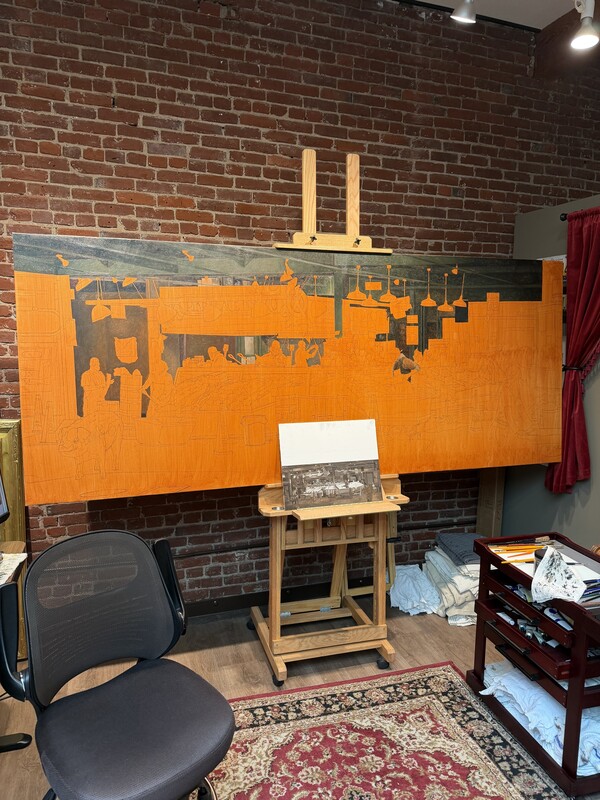
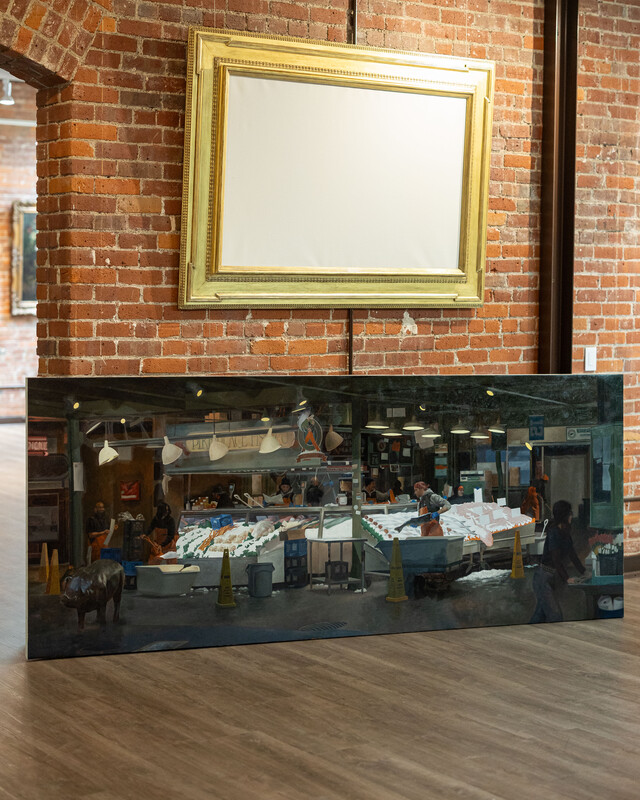
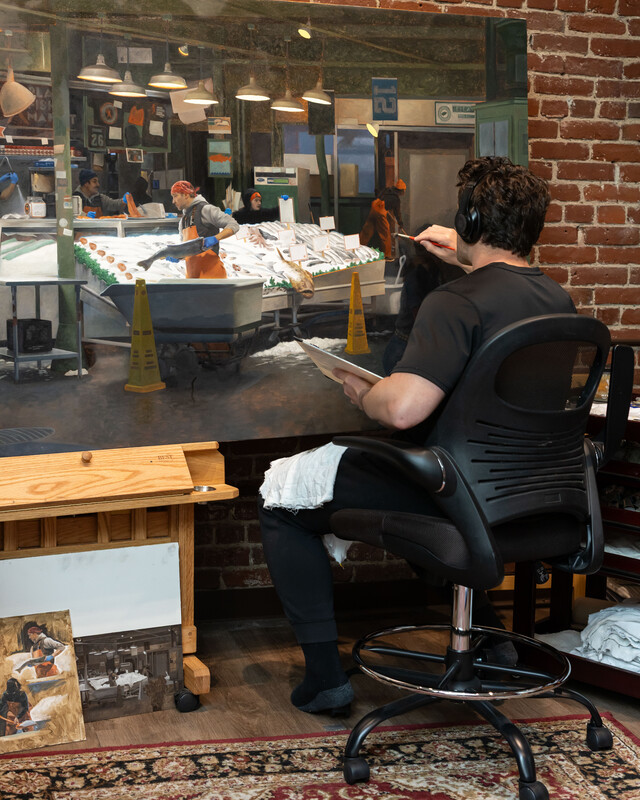
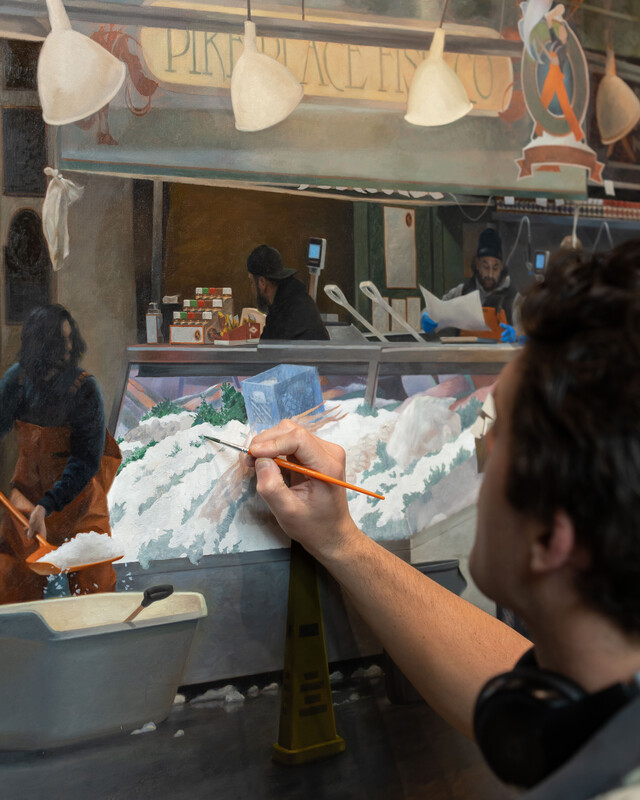
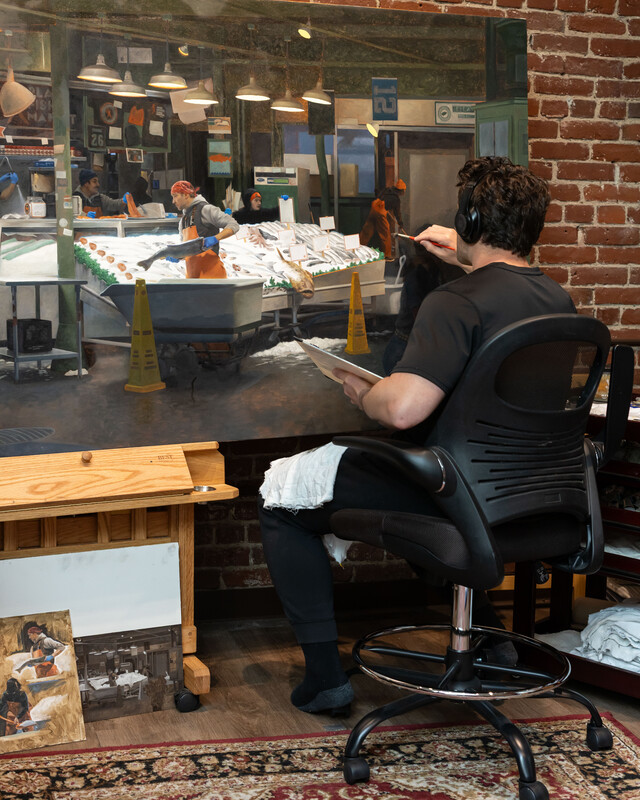
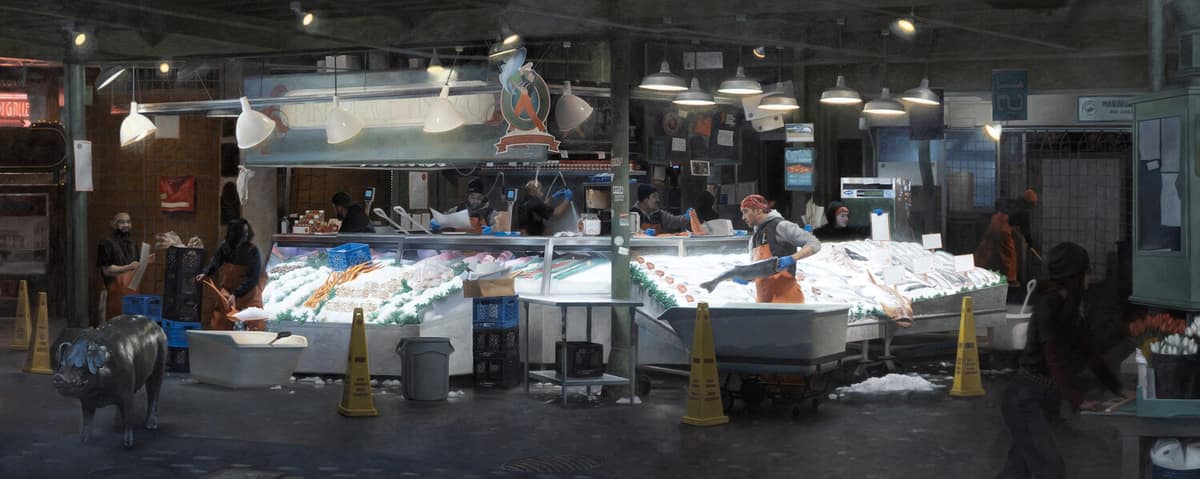
This painting is my third project I am working on as part of the Seattle Prize. It's a composition depicting the fishmongers at the iconic Pike Place Market in downtown Seattle. It's not your typical tourist version this familiar scene, however. Instead, it shows the workers behind-the-scenes preparing for the day and bracing for the chaos and spectacle that the fish market transforms into later in the day. It's a painting about the community, discipline, and the quiet, grueling work that goes into making something truly special. This painting will be 9 feet long and will occupy most of my studio time throug the end of winter into the spring.
9 posts and 26 photos from the studio, in the order Jackson made them.
Follow the making ↓The process
From first sketch to finished painting.
First post · February 12, 2026
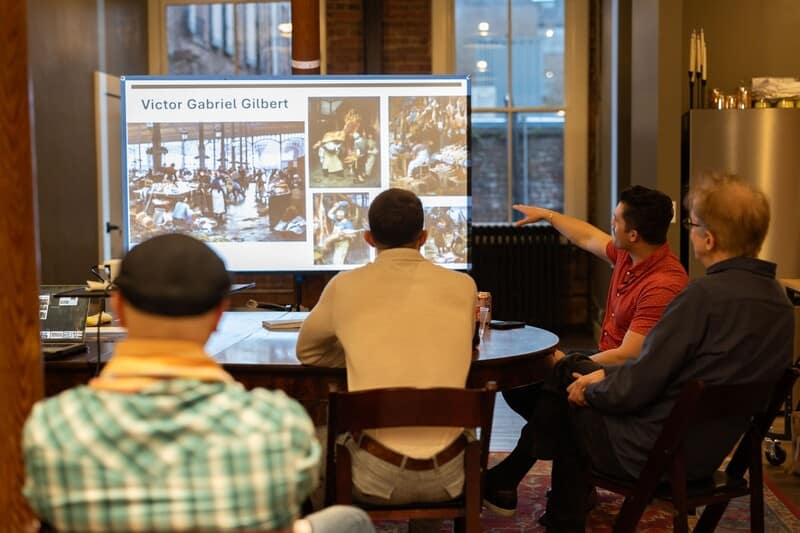
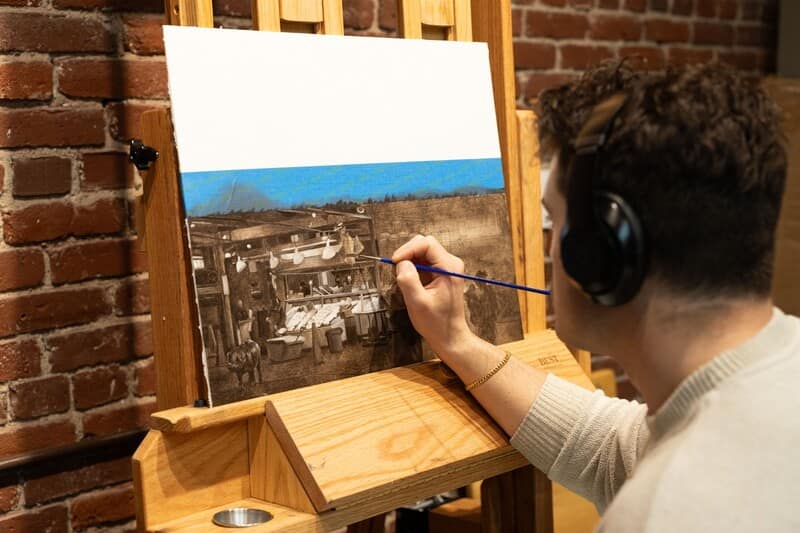
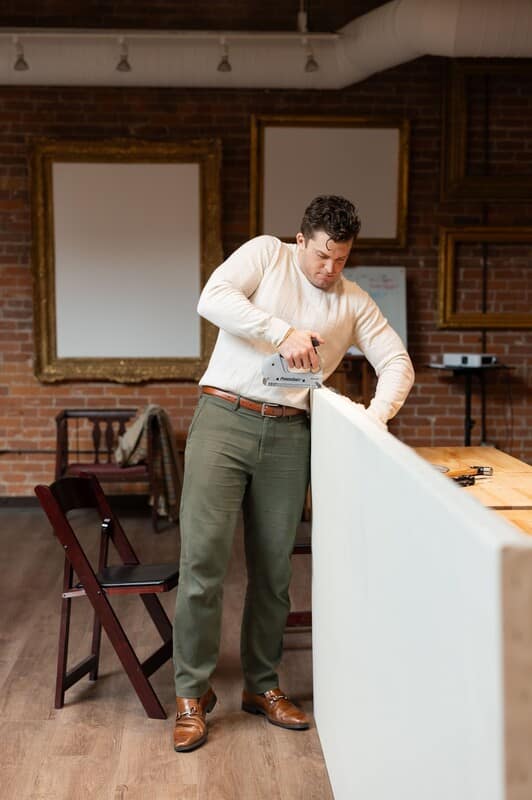
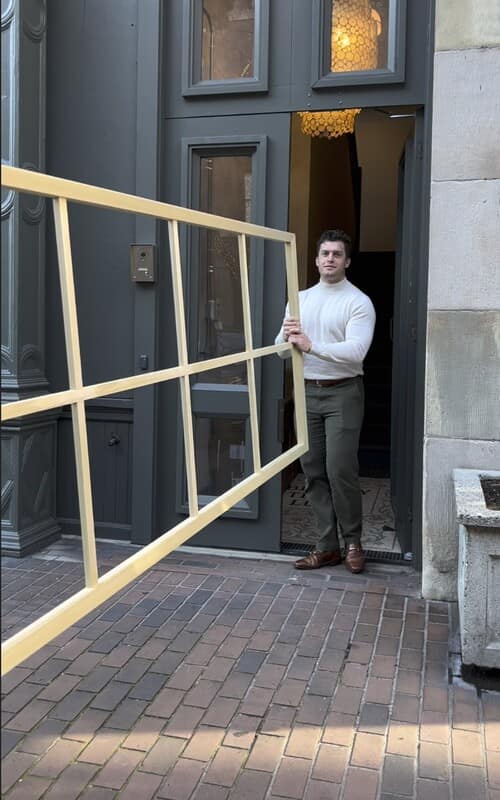
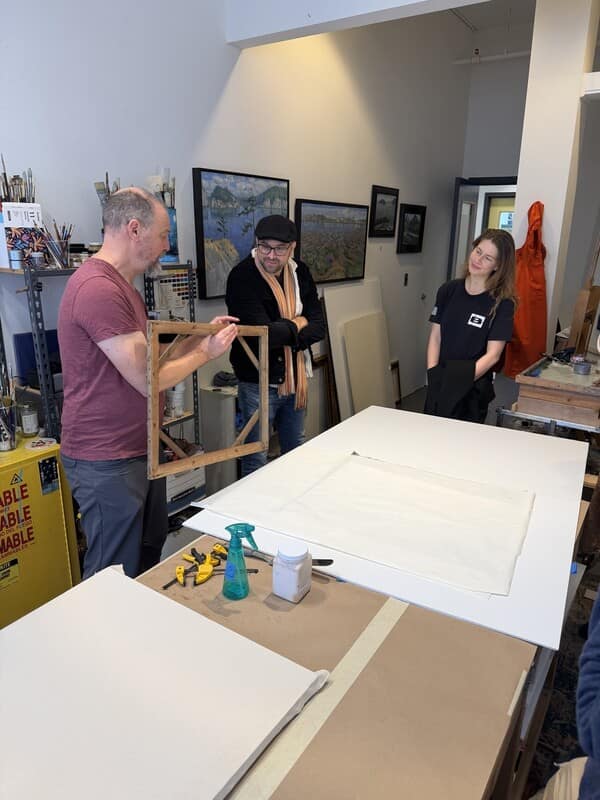
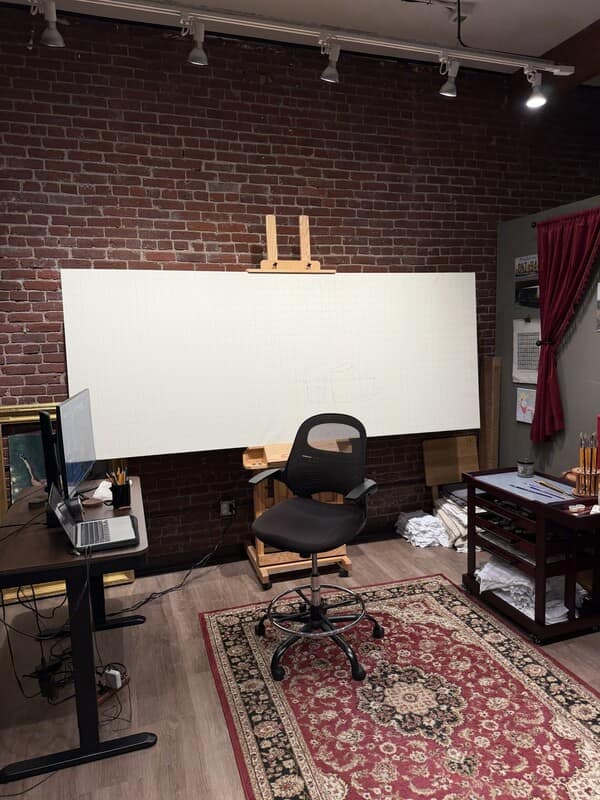
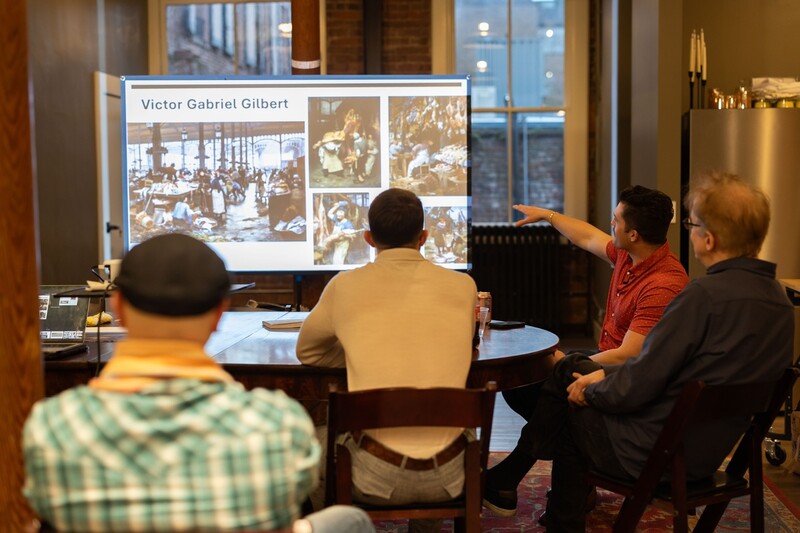
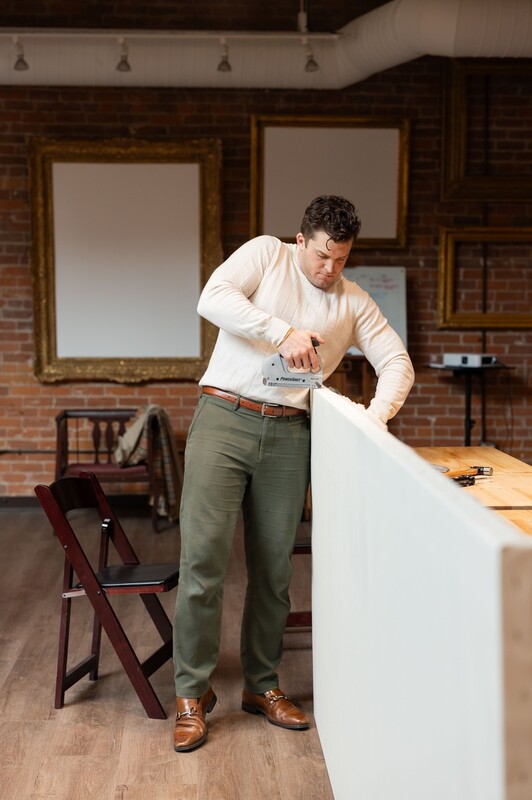
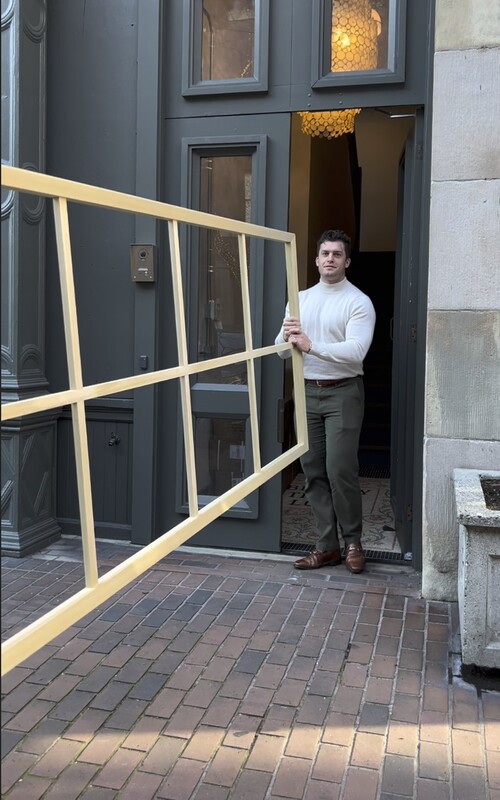
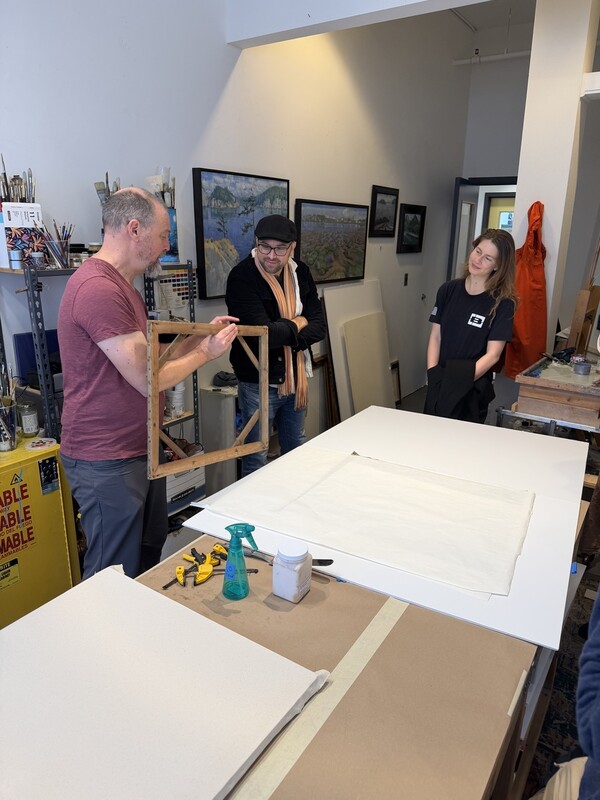
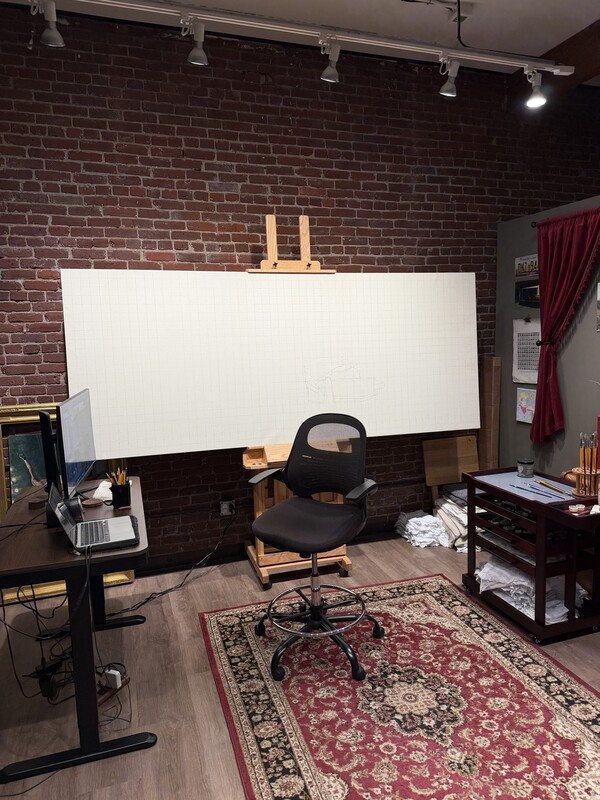
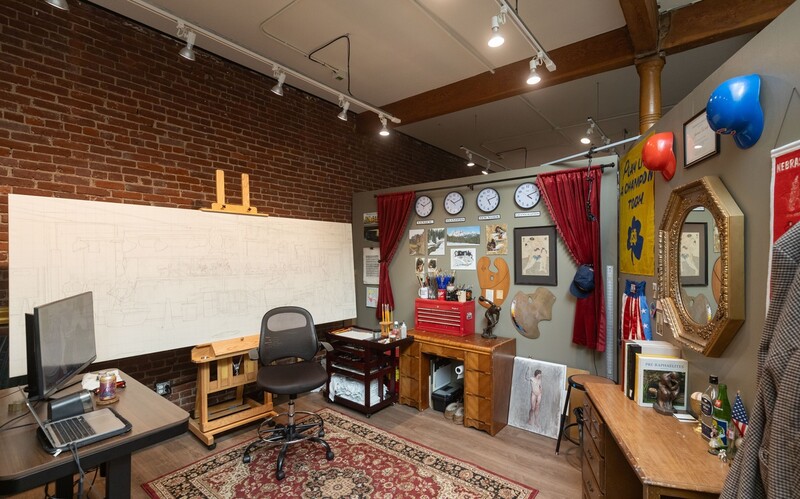
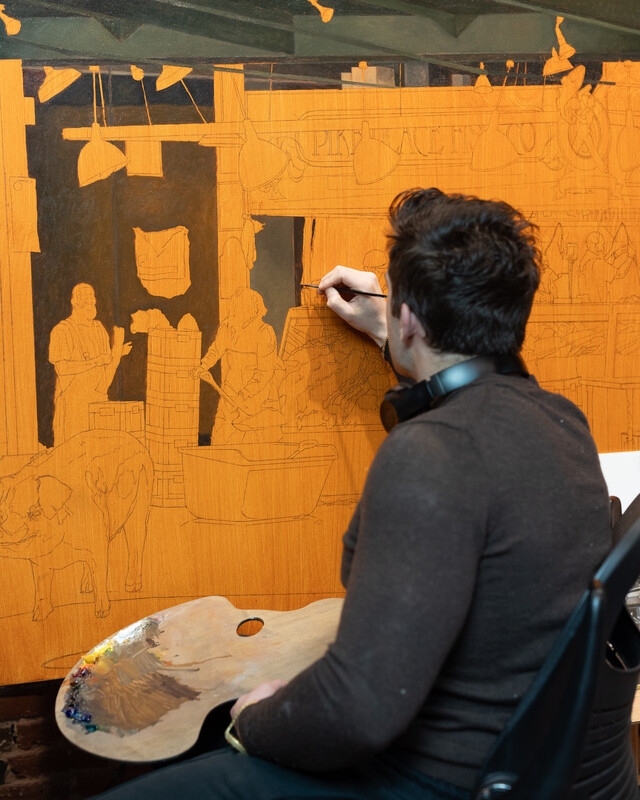
My third project is officially underway. Last week, I commissioned a nine-foot stretcher bar frame from a local craftsman who has worked with our facilitator, Tenaya, on previous projects. It arrived on Monday, beautifully constructed and imposing in scale. I spent the entire day stretching Claessens linen over it, which took much longer than expected working at that size. I had to remove and reset dozens of staples to achieve the tension I wanted, but by the end of the day it finally felt about the tightness I was looking for. Over time, I’m hoping the linen acclimates and absorbs a bit of moisture from the air, so it should continue to tighten just slightly. This week marks the beginning of the drawing phase. Because I’ve completed so many preparatory studies and digital mockups, transferring the composition feels almost procedural at this point. I’m using a grid to establish the primary structure, but once that scaffolding begins to dissolve, I’ll shift into freehand refinement. The goal is to build a drawing so structurally sound that the painting stage can unfold without hesitation. At this scale especially, the drawing must carry authority. I don’t want to be correcting proportions once values, color, and paint are involved. Last Thursday, we were fortunate to watch a demonstration by a local conservator named Eric who restores historical paintings. He walked us through his lining process, showing how a deteriorated or torn canvas is reinforced and stabilized. Seeing that level of material sensitivity was quite cool and inspiring, especially just days before stretching a canvas of my own. It reminded me that what we do is not just image-making but construction, preservation, and stewardship of objects meant to endure. For the next week or two, I’ll be solely focused on this drawing. At nine feet long, it’s a big undertaking, but this stage is the foundation of everything that follows. If I can lock in the structure now with clarity and conviction, I’ll be free later to focus entirely on edges, atmosphere, and risk. My hope is that a disciplined beginning will support what may become the strongest painting I’ve made to date.
Stage 2 · February 19, 2026
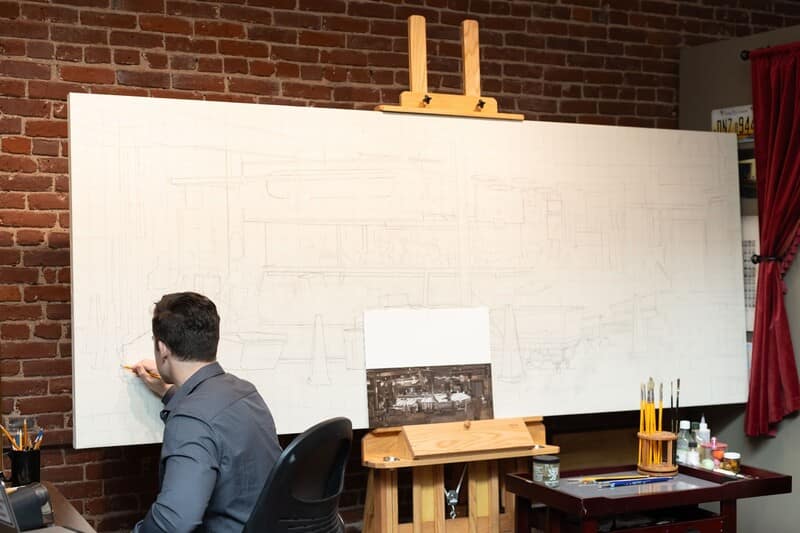
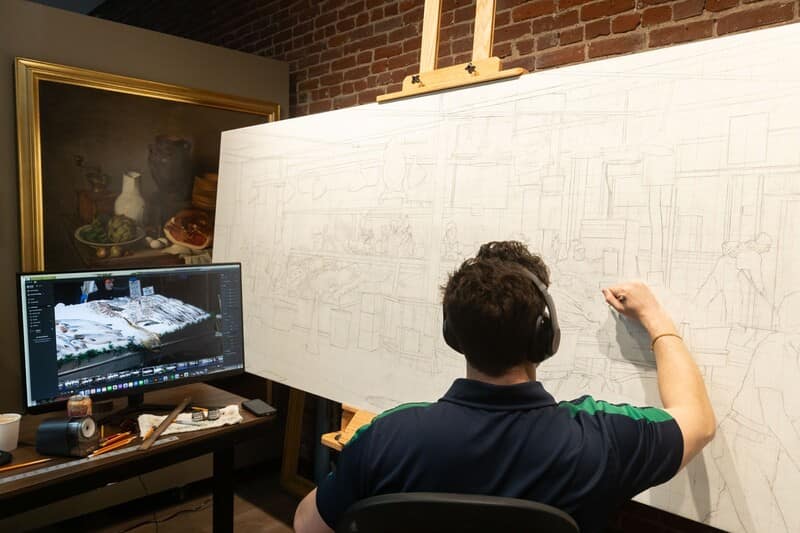
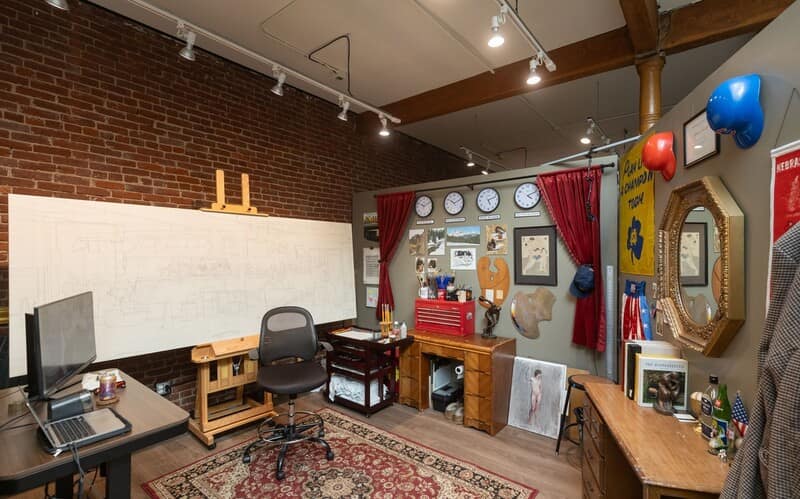
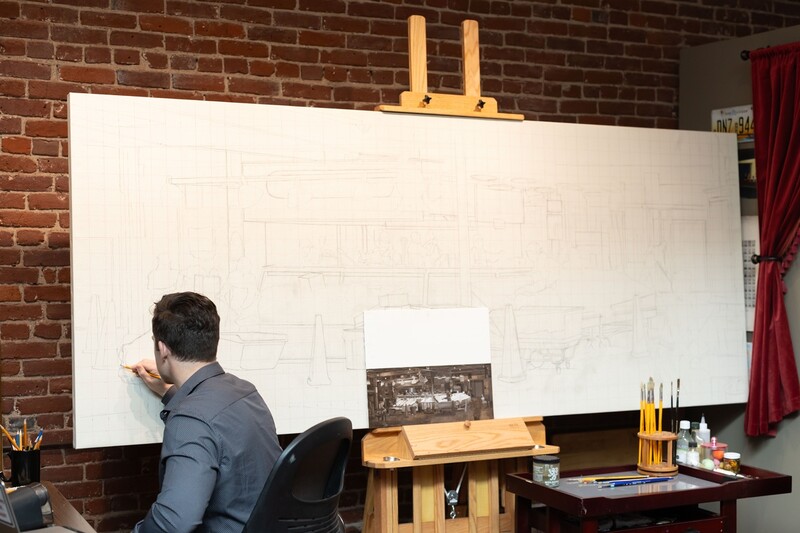
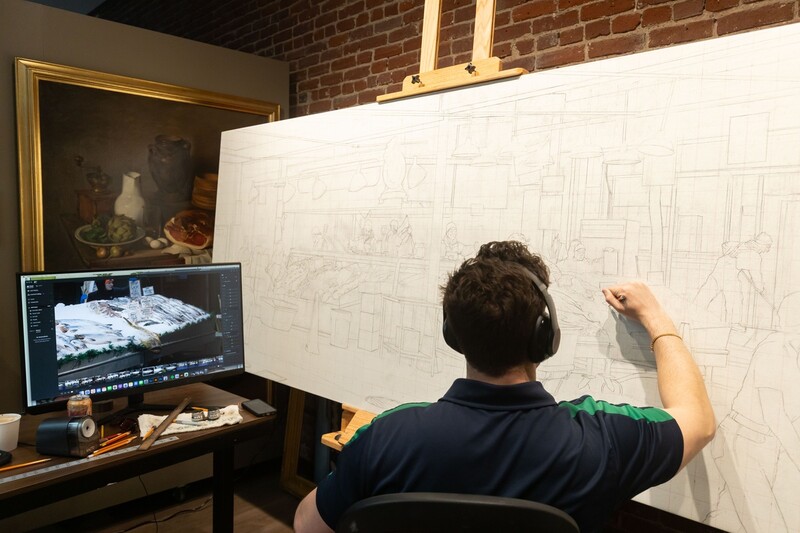
This past week has been devoted almost entirely to the drawing for my current project and third painting: a large panoramic scene of the fishmongers preparing for the morning at Pike Place Market here in Seattle. With nine figures moving through the space, it’s a composition that demands discipline early on. There is simply too much at stake here to rush the foundation. I’m treating the drawing as a structural audit. Before a single note of color enters the conversation, I want the proportions, perspective, and underlying shapes to feel inevitable and coherent. The ceiling, the floor, the horizon line, the stacked geometry of counters and crates, the recession of space, all of it must lock together. I’ve been using a ruler relentlessly, covering the paper in measured lines, wiping graphite off the side of my hand, erasing and redrawing until the architecture of the scene feels stable. It’s labor-intensive work, but it’s clarifying. For me, painting is a form of juggling. The fewer variables I have to manage at once, the stronger the result. If drawing, value, color, edge, and detail are all competing for attention simultaneously, one of those consideration is more likely to slip through the cracks. By resolving the structural questions now and making the drawing airtight, I can later devote myself fully to value relationships, then to color, and finally to the subtleties of edges and surface decisions. Stepping back from the drawing periodically has been essential. Distance reveals what proximity hides. My hope is that by the end of this week, or early next, the drawing will be resolved enough to ink ut and begin the underpainting. That transition always feels like crossing a threshold from planning into execution, and I’m eager to step into it.
Stage 3 · February 27, 2026
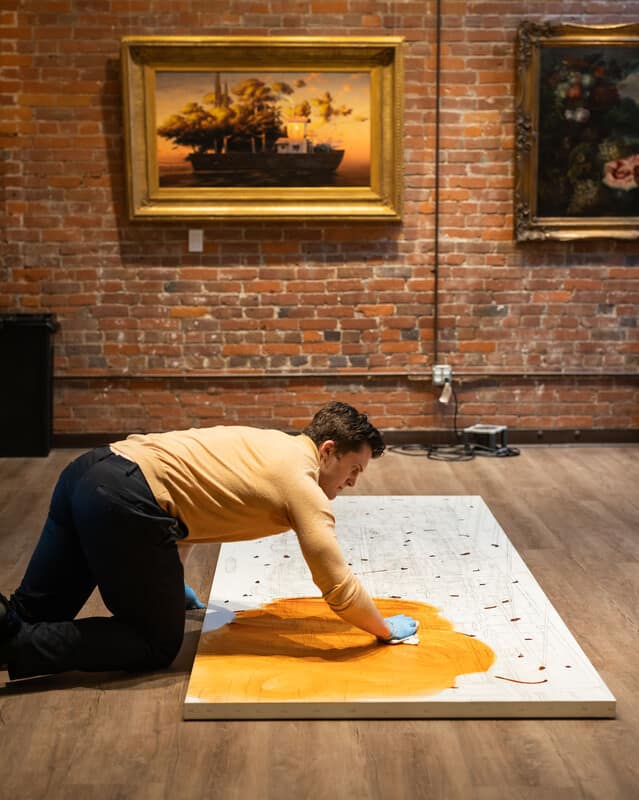
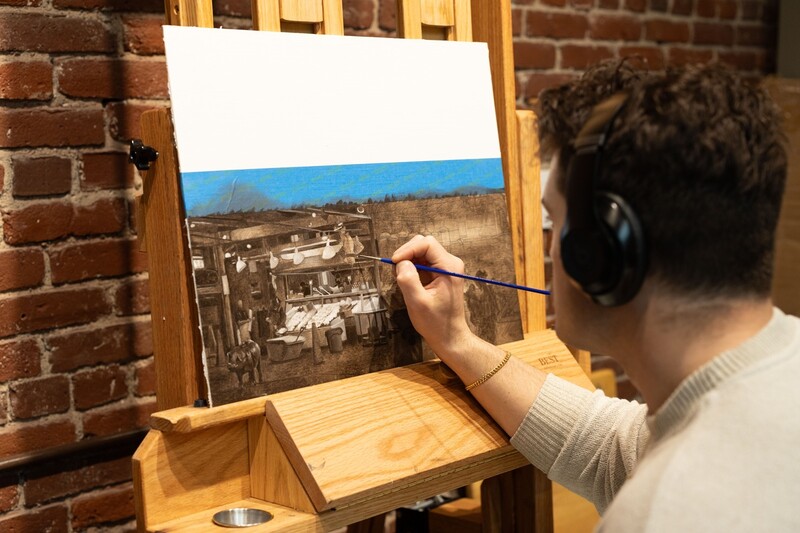
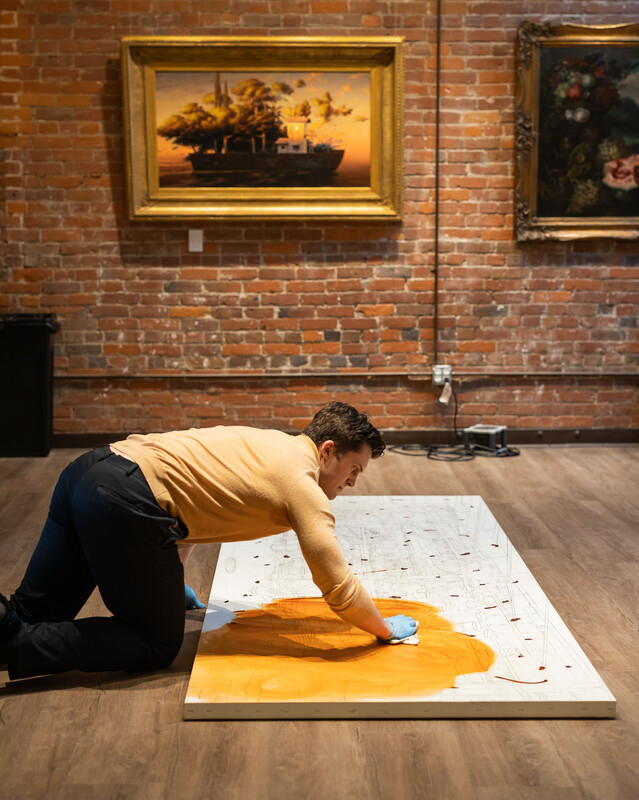
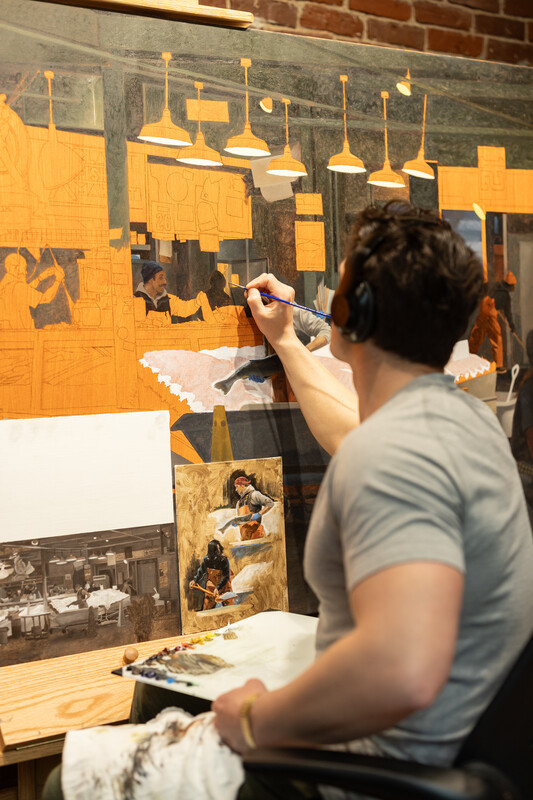
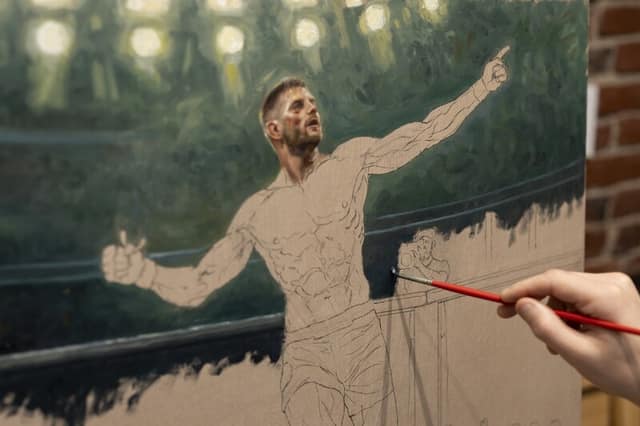
This past week I devoted to finishing the drawing for my next project: refining, correcting, and finally committing it to ink across the full nine-foot surface of the canvas. That step may sound redundant, but for me and my process, it is essential. I’ve painted directly over graphite before. Oil paint has a way of softening and dissolving pencil marks, and as the early layers accumulate, it becomes surprisingly easy to “lose” your drawing and watch those carefully measured proportions slowly drift away. On a canvas this large, that kind of erosion compounds quickly. The drawing is not a preliminary suggestion. It is the structural foundation of the entire painting. Every proportion, every interval of shape, every directional force is decided there. After investing that much time into resolving it, I have no interest in watching it disappear beneath the first passes of paint. Inking the drawing locks it in. It fixes the architecture in place. Even as I build successive layers, I can scrape back and find those ink lines beneath the surface — almost like seeing the bones through the skin. It gives me something constant to paint into, a stable armature that keeps the work honest as color and value begin to complicate the surface. Once the ink is dry, I apply a very thin imprimatura: burnt sienna diluted with odorless mineral spirits, rubbed directly into the fibers of the canvas. This serves two purposes. First, it lifts away any remaining graphite residue, leaving only clean, crisp ink lines. Second, it establishes a unified warmth across the surface. I plan for this painting to live predominantly in a cool key. By beginning with burnt sienna, I’m introducing a counterpoint and a reservoir of heat that can glow through the shadows and thinner passages. In certain areas and especially the darks, that orange will flicker through and create subtle temperature variation. Those small shifts are what give a painting life and energy. This disciplined preparation of the surface isn;t an invention of mine. It’s a method I’ve observed in old master works, including one I am very lucky to have in my studio right now. If all goes well, next week I’ll begin establishing the first true layer of paint in select areas of the canvas. The architecture is set. Now the slow construction of light and atmosphere can begin.
Stage 4 · March 6, 2026
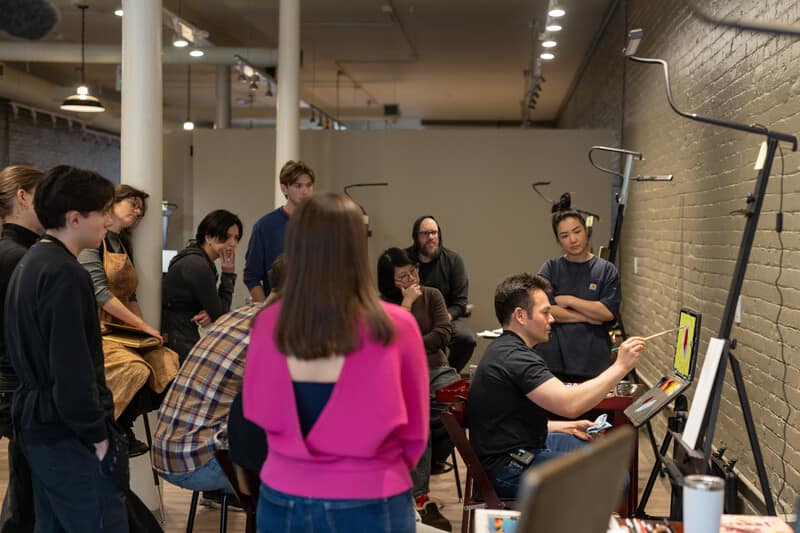
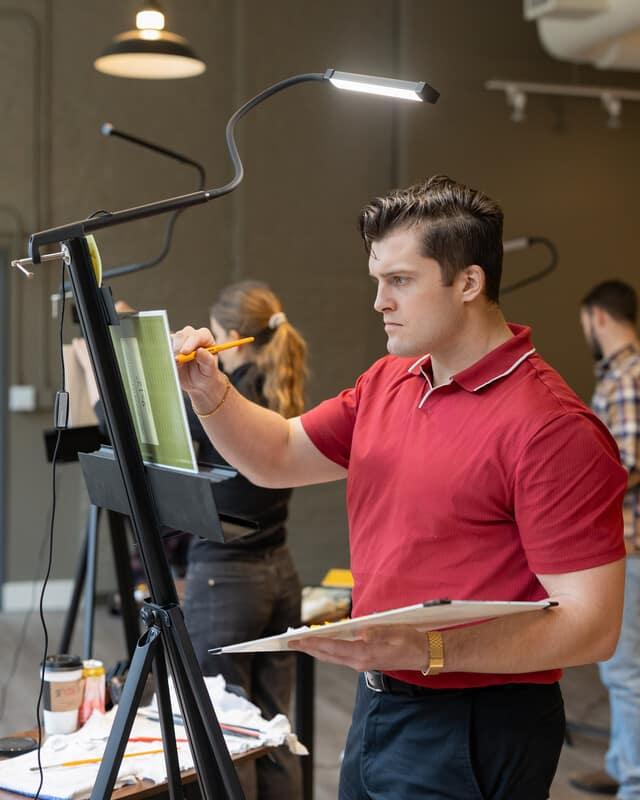
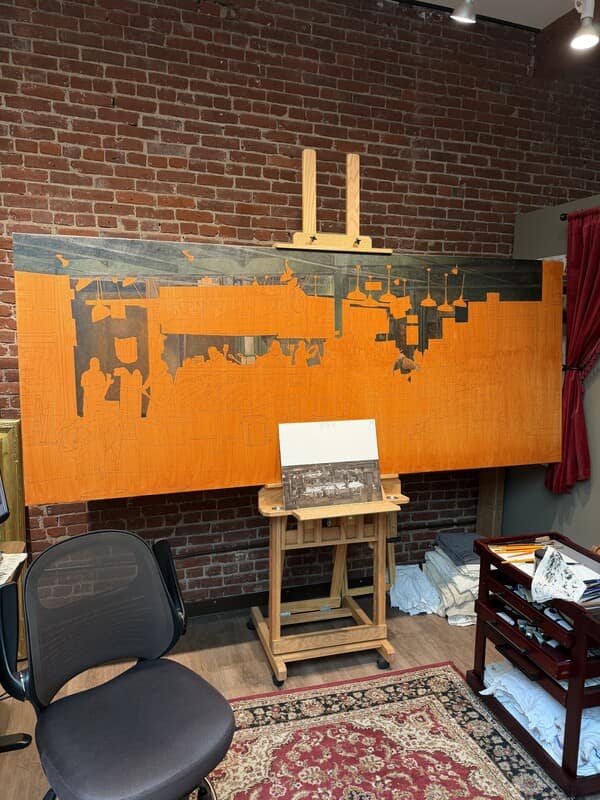
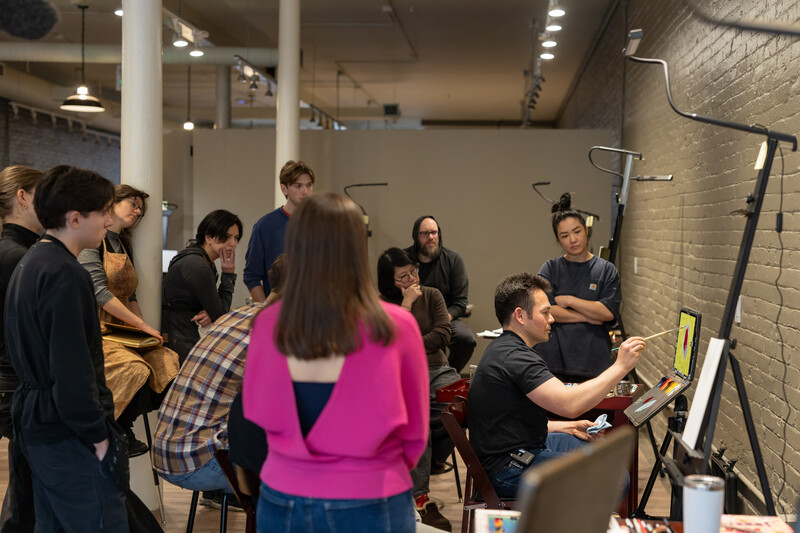
A few weeks ago we hosted our first workshop, featuring Washington state artist David Cheifetz. He led sessions on painting from imagination, and one of the central ideas he emphasized was the importance of establishing a clear focal point in a painting. In his demonstration, the focal point was defined as the area of highest chroma and strongest contrast. Everything else in the painting should ultimately serve that center of interest, guiding the viewer’s eye toward it and reinforcing its importance. While this is a concept I was already familiar with, seeing it demonstrated live had a real impact on how I’m approaching my current work. The painting I’m developing right now is a wide panoramic scene, and I think this principle will be especially useful. Rather than distributing visual intensity evenly across the canvas, I’m planning to concentrate it in one or maybe two areas that immediately draw the viewer in. The surrounding passages can then remain broken and more restrained. At the moment, I’m thinking about the figures in the scene and men working in the painting as characters, and deciding which one should occupy that central role. In other words, which figure becomes the visual anchor of the composition. For now, I’m still in the early stages, continuing to scrub in my ébauche and establish the overall value structure. Edges and chroma will come later. I’m happy with the progress so far, and it was important to have a productive first week since I’ll be away for a few days painting landscapes in Canada next week. I’m looking forward to getting some plein air work done while I’m there, so maybe I’ll share some of those pieces in my next post. And when I return, I’m excited to really start pushing this painting forward.
Stage 5 · March 21, 2026
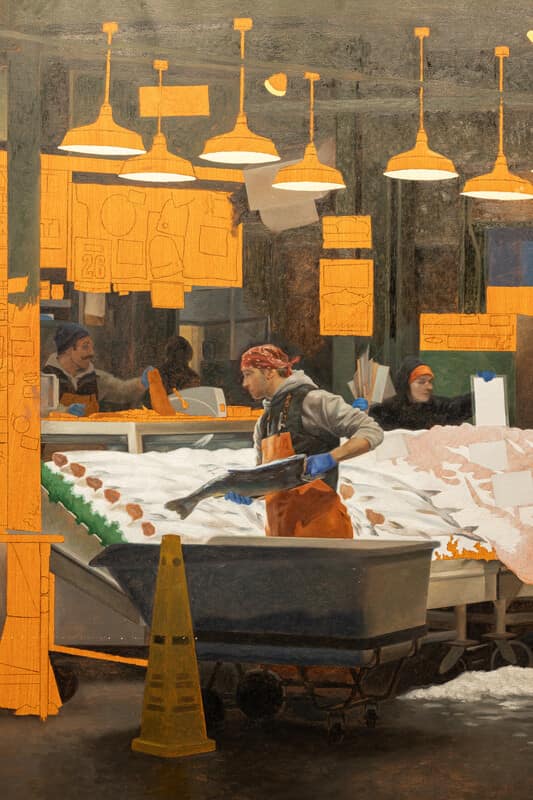
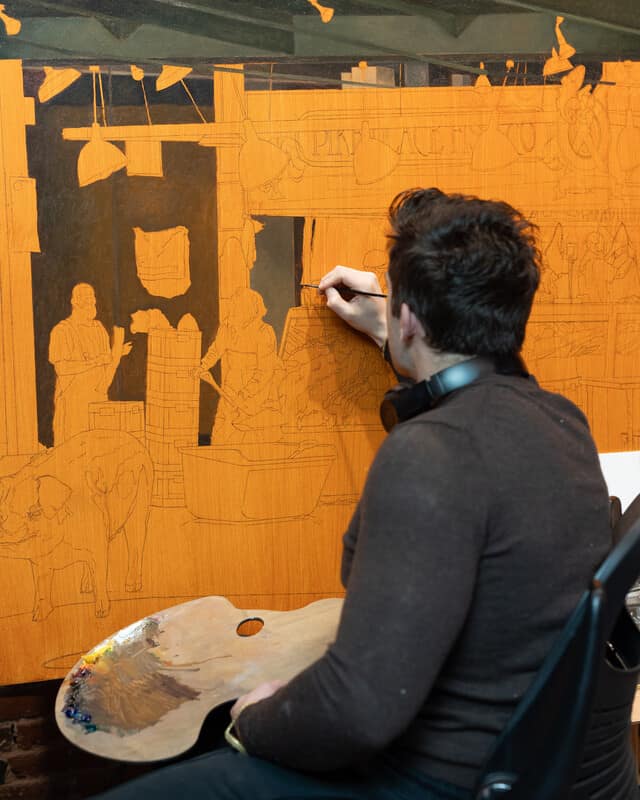
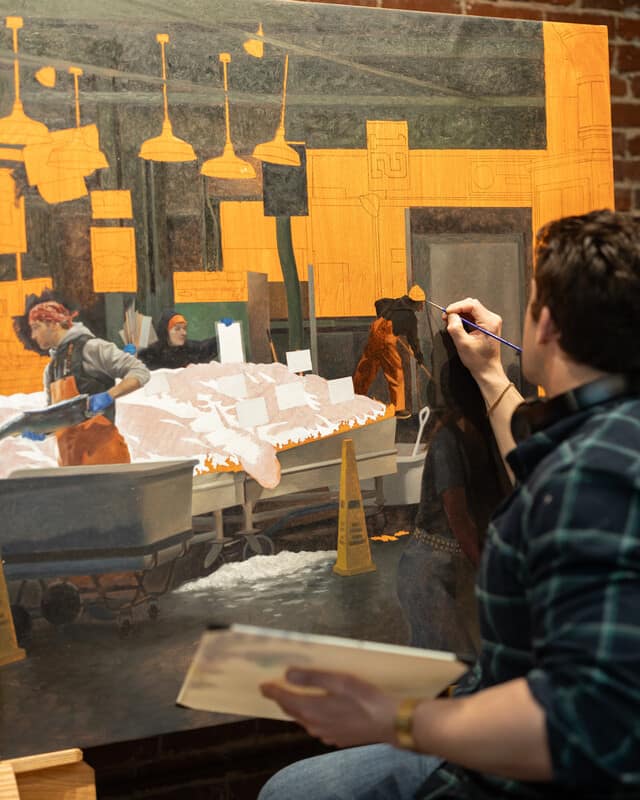
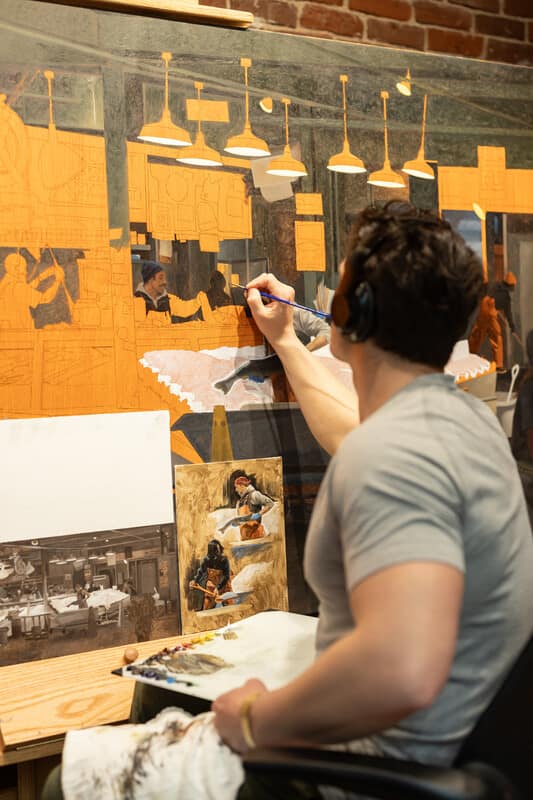
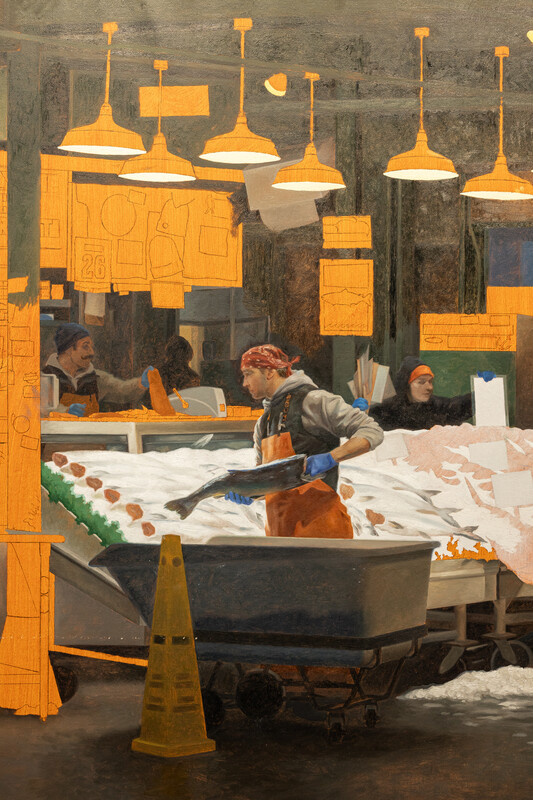
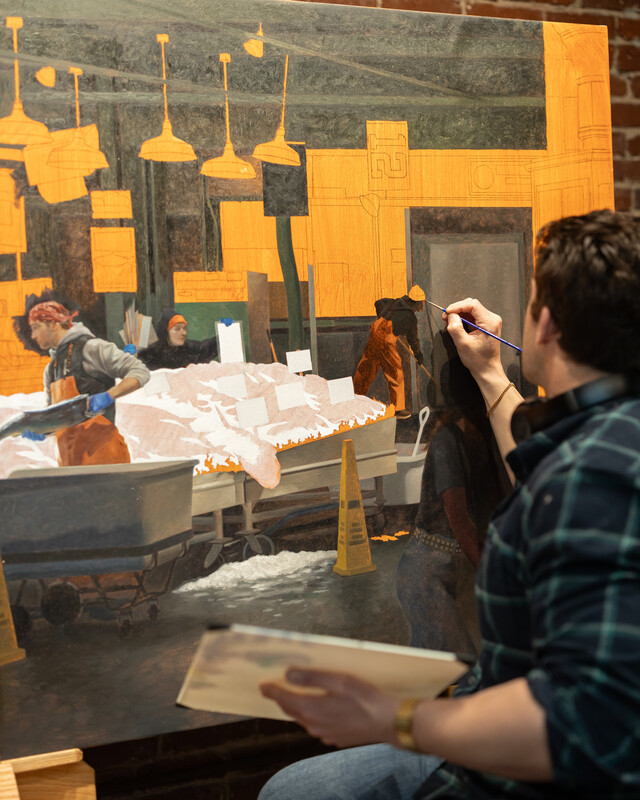
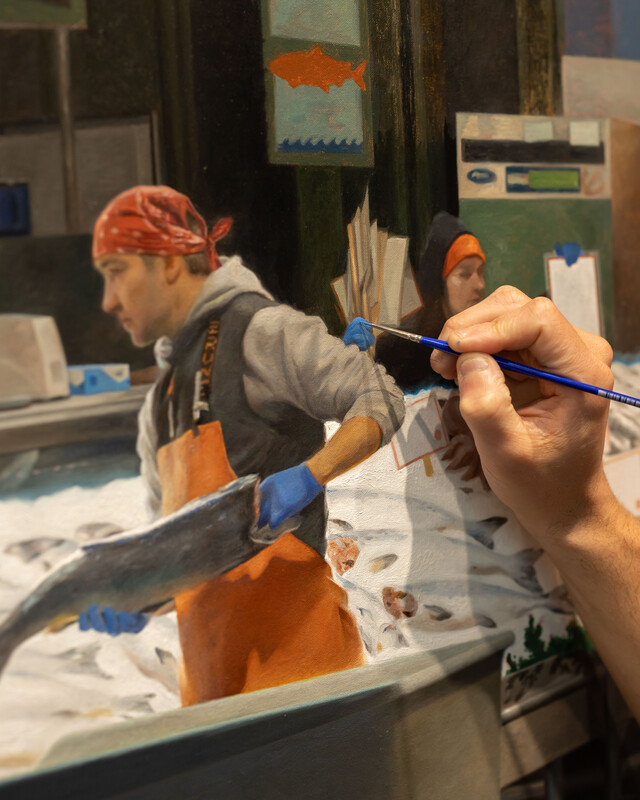
I’m now a few weeks into my Pike Place project, and the painting is beginning to take shape. At the outset, my goal was to establish a thin, scrubbed-in base layer akin to a traditional French ébauche. While I don’t follow a strict academic process, I use a similar approach where I keep the dark passages lean and transparent, while allowing the lighter areas to build a bit of texture right from the start. At this stage, I’m not overly concerned with color or edges. The priority is establishing a cohesive light & dark large shape structure that aligns with the initial value study I developed for the composition. Because of the scale of the canvas, I’ve also allowed myself to spend more focused time in certain areas. I’ve identified the primary figure as the focal point, and as a result, I’ve pushed that area further along than the rest of the painting. It’s beginning to resolve, and it serves as a benchmark so that whatever level of finish I bring that figure to, the rest of the composition must remain subordinate to it. For now, I’m continuing to fill in the remaining areas, keeping forms relatively flat and organized in terms of value. The more nuanced modeling and turning of form will come later. My immediate concern is preserving the clarity of these value relationships, especially so that the two trays of ice ultimately achieve the luminosity I’m after. I expect it will take another week or two to achieve full coverage across the canvas. Once that’s in place, judging color will become much easier. At the moment, the brightness of the burnt sienna underpainting is influencing everything, making it difficult to accurately assess mixtures. It’s all part of the process, and I’m confident the painting will come together in a compelling way as it develops.
Stage 6 · April 2, 2026
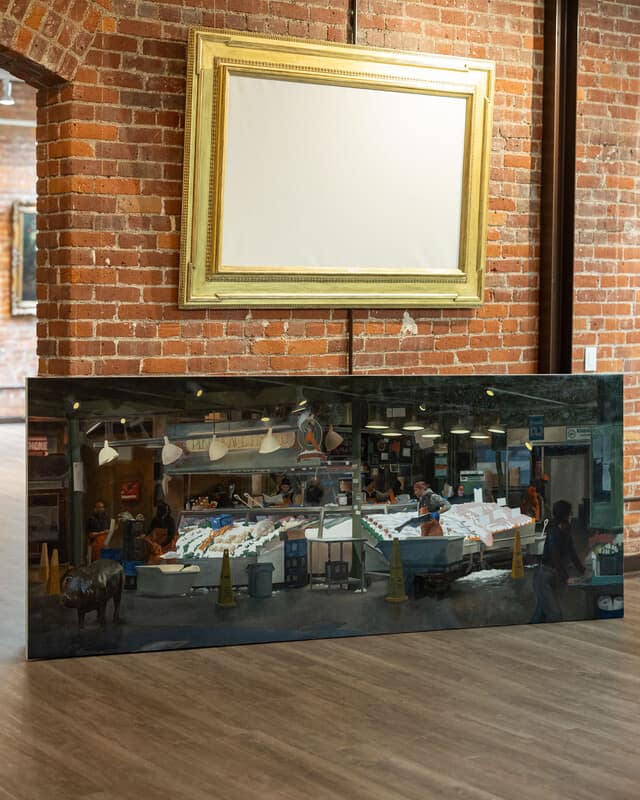
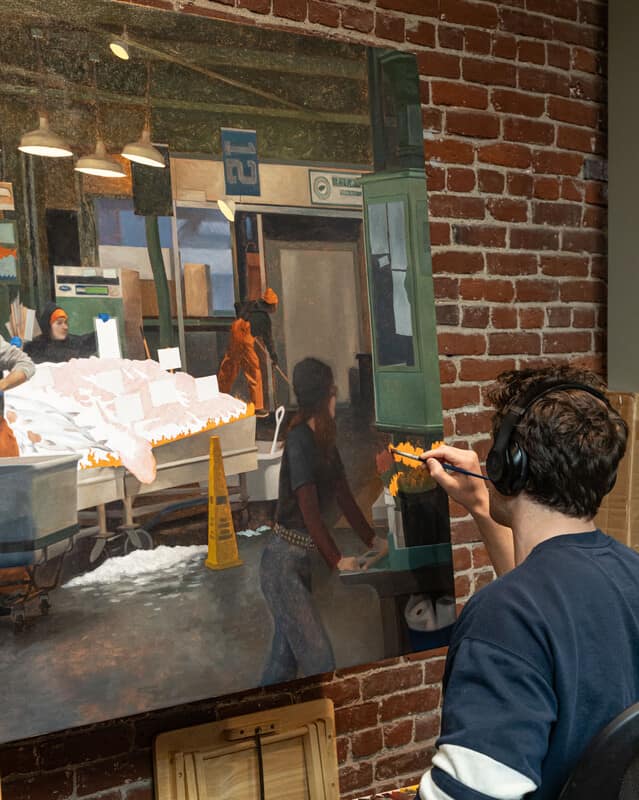
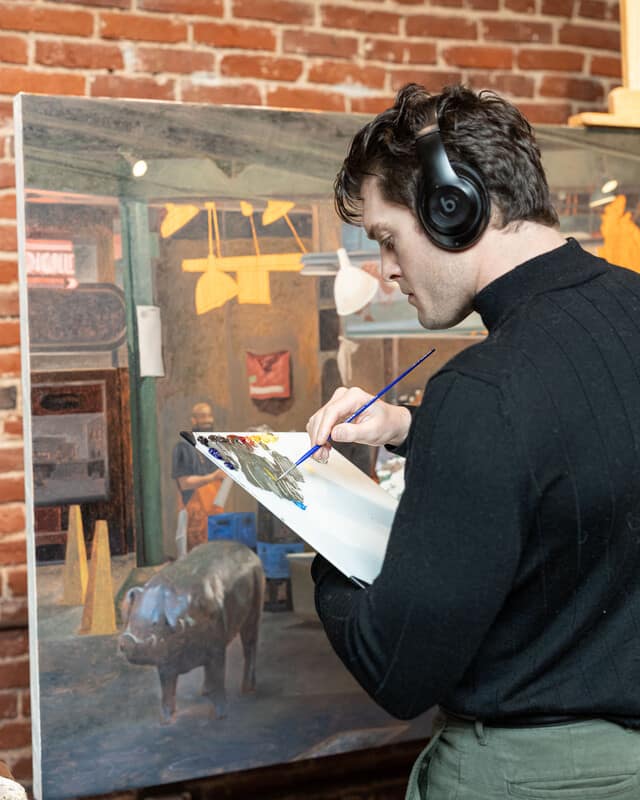
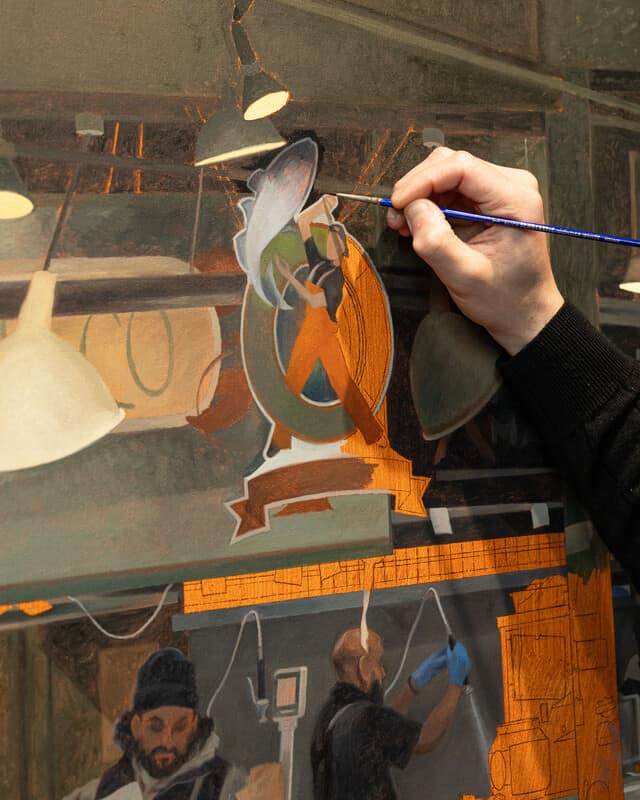
After what felt like an eternity (though really it was only a few weeks) I’ve finally brought the entire surface of the painting to a unified base underpainting. At this stage, every area of the canvas has been addressed, with the major value relationships established across the composition. Overall, the value structure is close to what I initially envisioned. The painting reads coherently from a distance, which was the primary goal of this phase. That said, I do feel it leans a bit too heavily on observation. What I’m ultimately aiming for is something more decisively designed and with a clearer intention behind each value decision. Fortunately, that’s a shift I can still make as I move forward. One early adjustment I’ve already made was glazing with titanium white in the ice tray area on the left. It’s an unconventional choice, given titanium white’s opacity, but I wanted to lift that passage in a more immediate way. This will require some reworking as expected, but I think it sets up a stronger value relationship that will pay off in the next layers. From here, the real painting begins. I’ll start building into the underpainting with a focus on color variation, form modeling, and a greater sense of dimensionality. After that, attention will turn to edges and deciding where to sharpen, where to soften, and where to let forms dissolve. That’s where the painting begins to reward close looking. At this point, the image is doing what it needs to from across the room. The challenge now is to make it hold up at arm’s length and to give it richness, subtlety, and a surface that invites sustained attention. That will be the focus over the coming weeks as I push this piece toward resolution.
Stage 7 · April 23, 2026
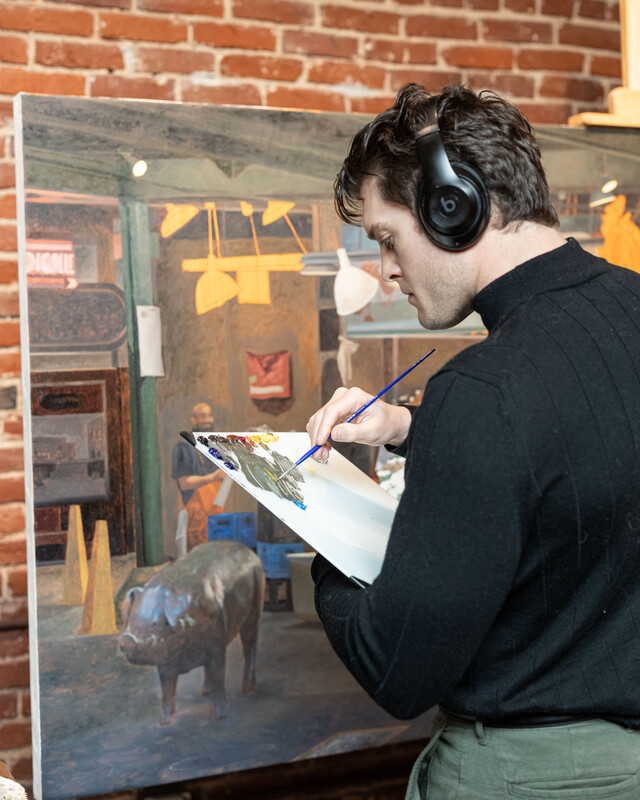
As I move deeper into the second layer of this painting, my attention is shifting. With the drawing and value structure becoming more established, I’m starting to focus more carefully on the surface quality and edge control. This is usually the point where I step back and look online to study high-resolution images of paintings I admire to better understand how those artists handled form, transitions, and the paint itself. I’m not trying to imitate these works directly, but rather to absorb something of their character. The collection of images I’m sharing today reflects that. Close-up views of paintings where the edges, shapes, and brushwork carry a kind of authority and subtlety that I’m aiming toward in my own way. Working from a photograph gives me access to more visual information than I could ever need, but it also encourages a certain tightness and predictability in the rendering. As I continue refining the structure and locking in accuracy, I’m increasingly aware of the need to counterbalance that tendency. Ironically, it’s often in the later stages once my fundamentals are secure that I’ll reach for larger brushes and begin to introduce more expressive decisions. That might mean pushing background shapes into foreground contours, sharpening or totally loosing edges, or allowing small irregularities to emerge across the surface. These are qualities I admire in older paintings, many of which were not built from photographic reference and instead evolved through a more exploratory, responsive process. While they may lack the exacting fidelity we associate with contemporary realism, they possess a kind of vitality an unevenness that gives the image life, especially at scale. Of course, the standard set by these artists is incredibly high. But if I can capture even a fraction of that energy and intelligence in my own work, I’ll consider this painting a success.
Stage 8 · April 30, 2026
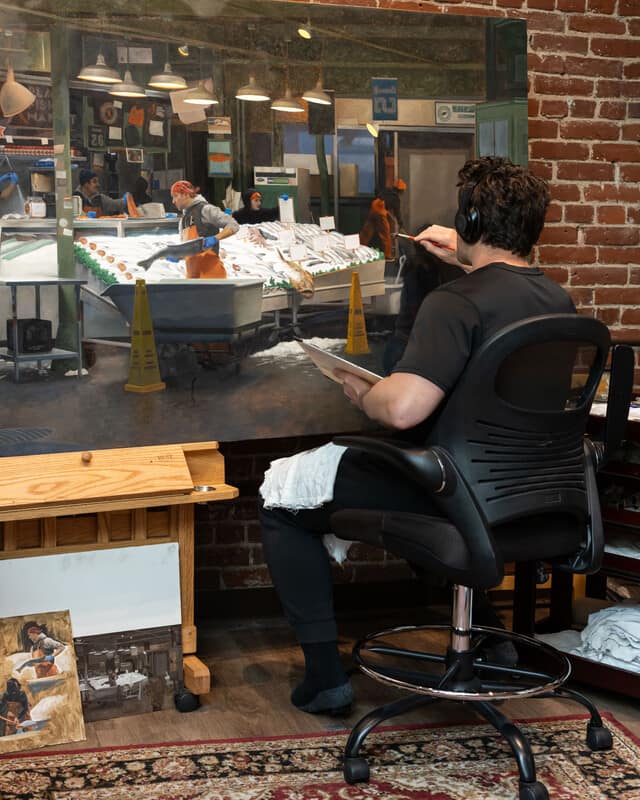
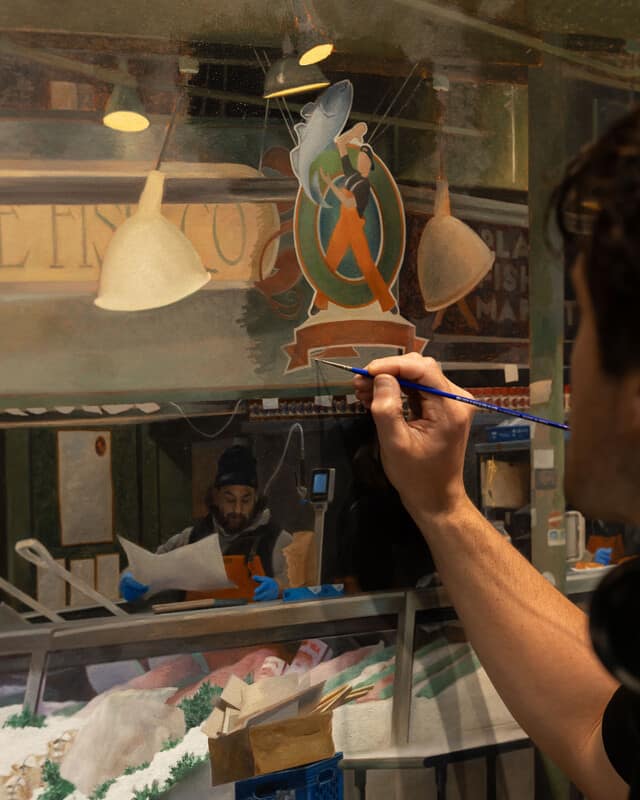
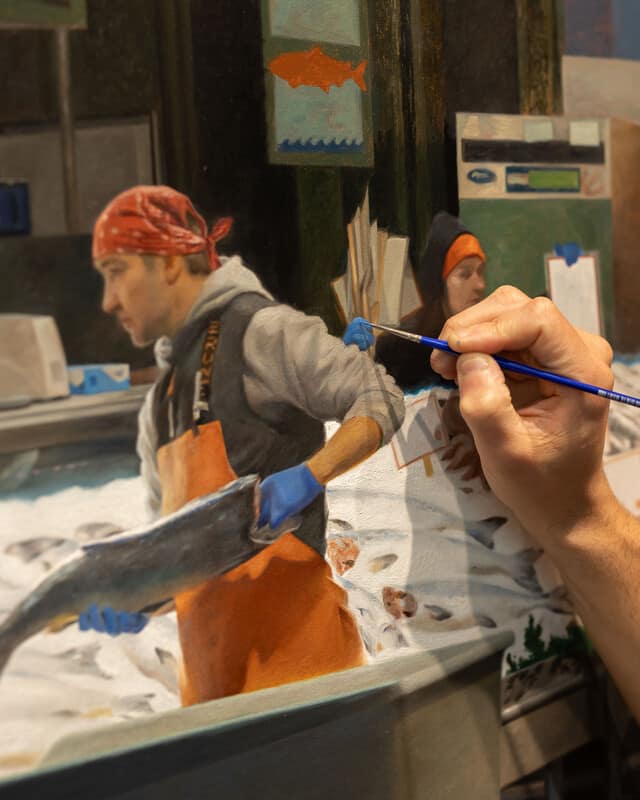
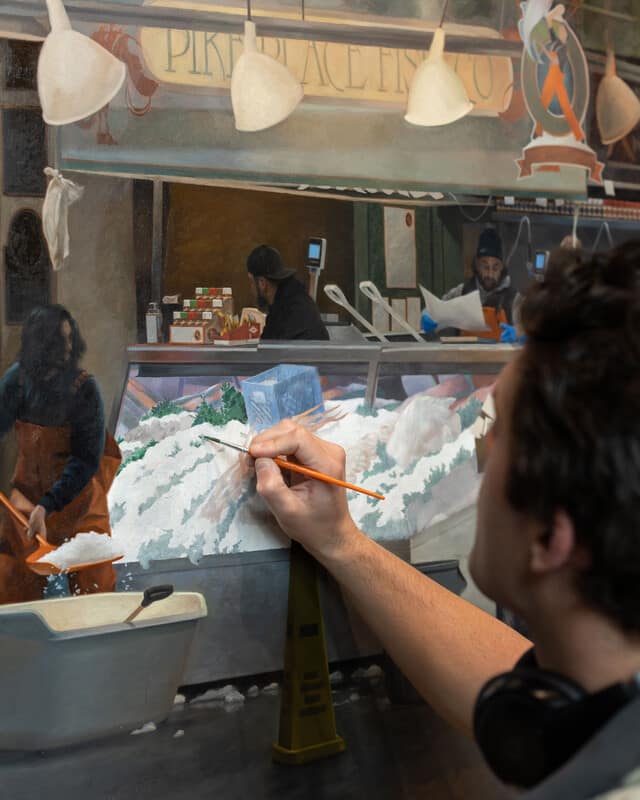
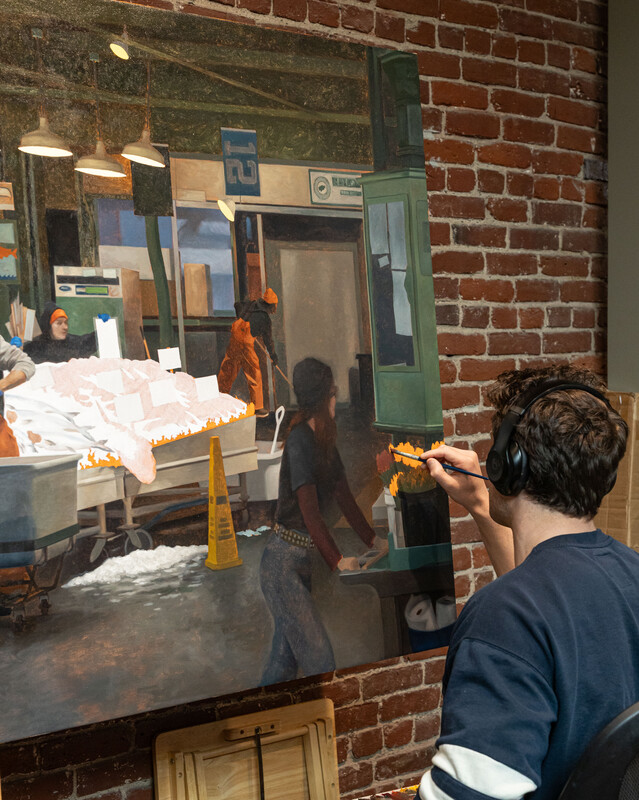
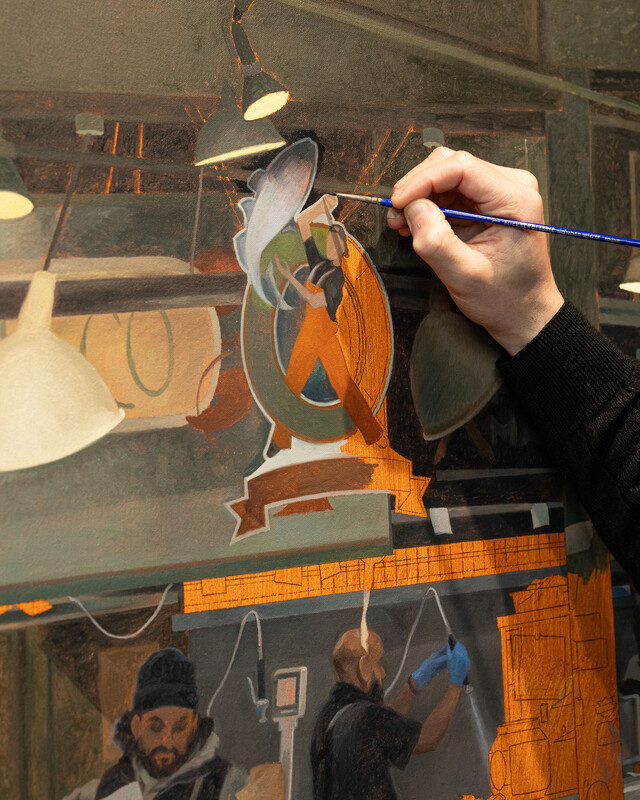
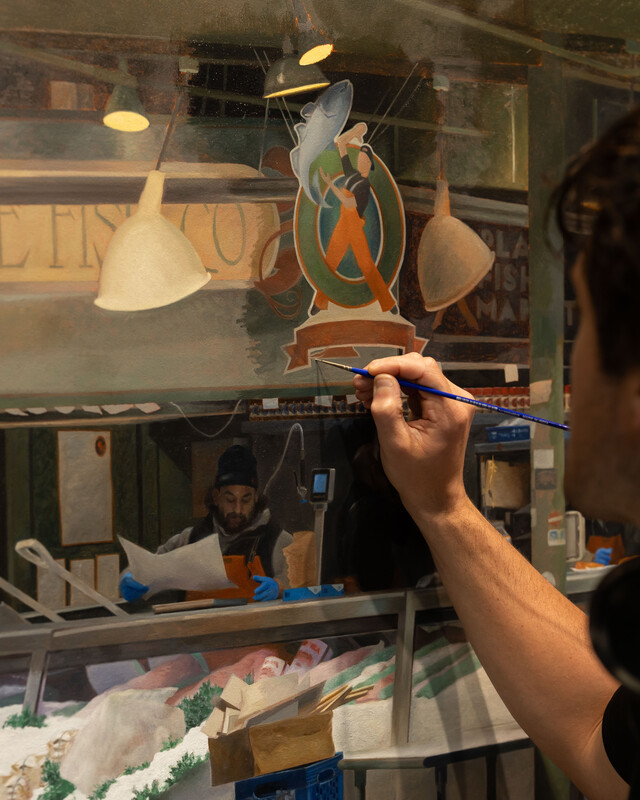
I’m nearing the end of the second pass across the entire surface of this painting, which is an important step and really the meat and potatoes of my entire painting process. The underpainting is now mostly buried, though I’m still keeping things deliberately thin in places so that some of that initial freshness and scrubbed-in energy can breathe through. You can see my second layer of paint versus the first in some of these photos as the wet, more “hyrdated” areas are where I just put down a fresh layer on top of my underpainting, which after several has become zapped of its initial moisture and absorbed into my thirsty canvas. This help This stage has been about clarifying the forms, stabilizing the value relationships, and making sure the painting reads together as a cohesive whole. From here, the third pass begins—the stage where the work starts to come alive. Edges, surface quality, selective detail, and other decisions become more deliberate and the image gains a real sense of polish and presence. Progress on a canvas of this scale can be slow, steady, and not always dramatic from week to week in a way that lends itself to an entertaining weekly blog post. There’s a lot of repetitive labor in between the more visible leaps forward. But the reality is that often paintings that reward a long look are usually built slowly, patiently, and without much spectacle along the way.
Latest · May 7, 2026
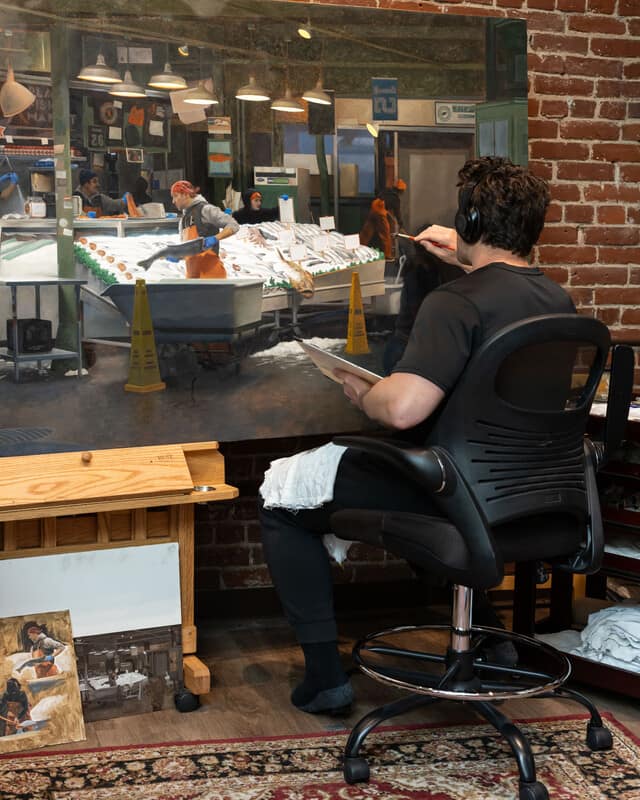
No new updates. Simply hard at work trying to finish up this giant painting before our World Cup opening exhibition next month. I’m very excited for this show and hope that the locals feel a strong sense of Seattle pride when they see this freshly completed canvas.