

Loading...
There is a kind of painting that needs a patron.
It is made for the public rather than for one person's living room: a large canvas about grief, or mercy, or the dignity of ordinary work, meant to hang where a whole city can stand in front of it. Almost nobody buys that painting for their home. If no one commissions it, it does not get made.
For most of history the patron was the church or the crown, and the art served religion or power. Today calls for something different: art that brings people together around a shared human experience. That is what the Conru Art Foundation collects at the Occidental, and it is the kind of work the Seattle Prize especially wants to foster.
We call it Rehumanism. It is not a rigid movement or a style. It is an invitation for artists to combine their highest technical skill with a generous spirit, making work that truly serves the people who encounter it. Think of it as art with intention, where exceptional craftsmanship meets genuine care for the human experience.
The pieces we choose for the collection are the ones that carry these ideas: serious human subjects, painted with enough skill and care that they resonate deeply with the viewer.
When we talk about Rehumanism, we're really talking about three things that most people already value deeply:
Not superficial prettiness, but the kind of visual harmony that makes you pause and breathe a little deeper. Something that speaks to everyone, regardless of their background.
Honest portrayals of real human experience. Art that doesn't pretend or manipulate, but shows us something genuine about what it means to be human.
Not sentiment, but genuine care. Art created as a gift to the viewer, work that asks "How can this help? How can this connect us?"
Look around. We're living through some challenging times. People are feeling isolated, anxious, and disconnected despite being more "connected" than ever before. Political divisions seem unbridgeable. Many are questioning what really matters.
In moments like these, art has historically played a crucial role. Not as decoration or intellectual exercise, but as something that actually helps. Art that reminds us we're not alone. Art that shows us beauty still exists. Art that helps us feel more human.
Art that speaks to everyone, not only to experts.
Art that connects people across what divides them.
Art that takes on hard subjects like grief, conscience, tenderness, and failure, and still leaves the viewer more human, not less.
Art made with deep skill and intention, not quick or disposable.
Art made as a gift to others, not only as personal expression.
Art that nourishes rather than leaves people empty.
Every good painter can paint a hundred wonderful things. A few of those sit where the artist's own skills and subjects overlap with Rehumanism. That overlap is what we look for in a Signature Work.
We encourage artists to spend time with the great humanist works of the past, the paintings that still stop people centuries later, and to find their own way of translating what those works did for a modern audience. Each artist's skills and subjects are different, so each Signature Work is unmistakably theirs. What they share is that they were made for everyone who walks in.
Left: what this artist paints best. Right: Rehumanism. The overlap is the Signature Work.
If Beauty, Truth, and Love are the foundation, how do we actually build on them? Here are the practical principles that guide the work:
The better your technical ability, the more you can offer others. Mastery isn't about showing off. It's about having the tools to truly help and inspire.
Before, during, and after creating, the artist considers the work's impact on the viewer. Will this bring comfort? Understanding? Joy? Connection?
Great art shouldn't require a PhD to appreciate. Like a beautiful sunset or moving music, the best art speaks directly to our common humanity.
Show reality, but show it with dignity. Every subject, powerful or vulnerable, deserves to be portrayed with respect for their humanity.
In a time of division, art can remind us of what we share. Focus on universal experiences rather than what separates us.
The real test isn't "Is this art?" but "Does this make people's lives a little better? Does it heal rather than harm?"
Will this work still matter in fifty years? Will future generations be grateful it was created? That's the kind of lasting value we're aiming for.
People hunger for beauty, meaning, and connection. When you offer these genuinely, people respond, because you're feeding something real.
For most of history, painting on this scale was paid for by the church or the crown, and it served religion or power. The best of it still spoke to ordinary people, because ordinary people were the ones standing in front of it. And every so often the public itself became the client.
The art that still moves us centuries later was rarely made for the artist alone or for critics. It was made for the people who would live with it.
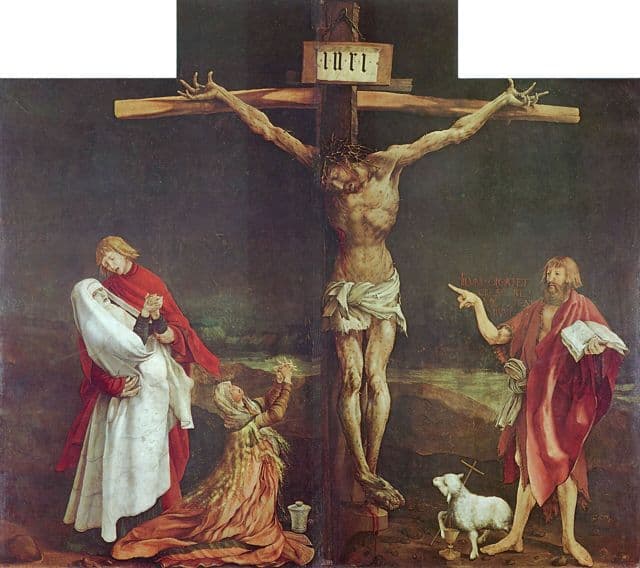
Isenheim Altarpiece
Matthias Grünewald (1512 to 1516)
Commissioned by a hospital. The sick looked up and saw their own suffering held with dignity.
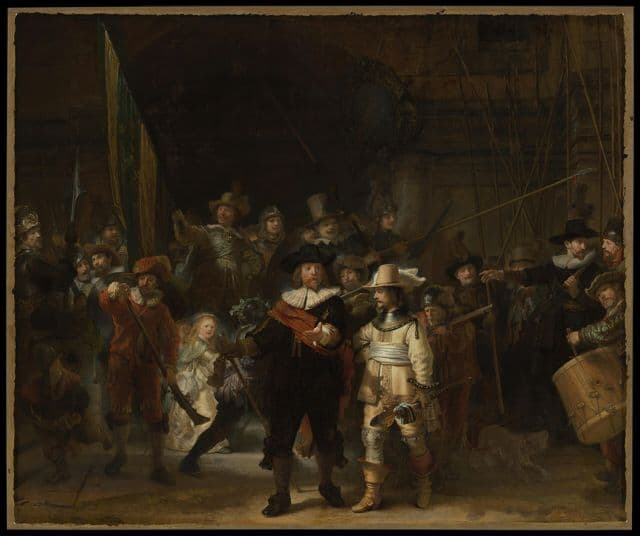
The Night Watch
Rembrandt van Rijn (1642)
A civic militia company chipped in to hire the best painter in Amsterdam. Citizens commissioning a masterpiece.
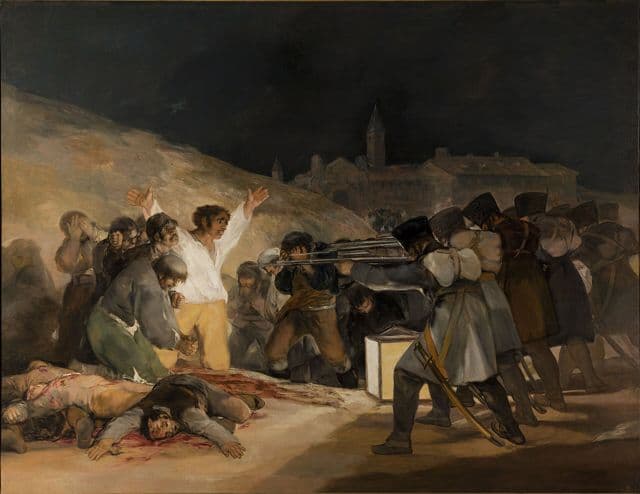
The Third of May 1808
Francisco Goya (1814)
Painted with public funds to remember an uprising. A city's grief given a face.
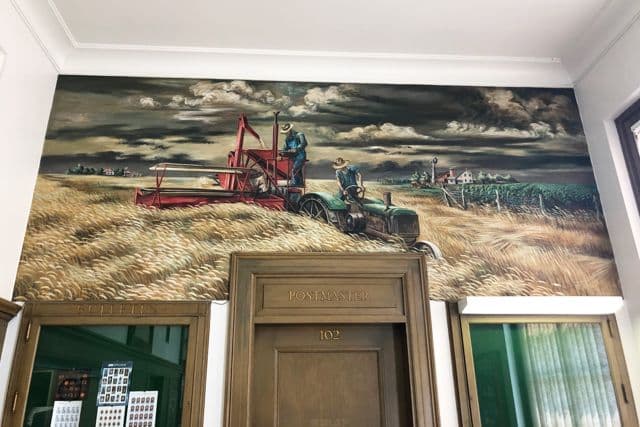
Men and Wheat, Seneca Post Office
Joe Jones, Kansas (1940)
The federal government put thousands of painters to work in post offices, schools, and hospitals.
A patron without a throne
No church or crown stands behind this work, and no message is required of it. The client is the public.
A collection anyone can walk into
The paintings hang at the Occidental in Pioneer Square rather than in a private home. Admission is free. Nobody needs a degree to stand in front of them.
Shared ground
In a divided time, we fund paintings about what people have in common: work, family, loss, joy, conscience. The subjects everyone already knows from the inside.
The longer argument, and the working material behind it, is written up in two books. Both are still in progress and open to read.
Here's the thing: Rehumanism isn't really about a particular style or technique. It's about intention. It's about asking yourself, as an artist: "What if my work could actually help people?"
You don't have to paint differently or change your style. You just have to ask yourself: Could this work bring someone comfort? Could it help them see beauty in their own life? Could it remind them they're not alone?
When you start creating with that kind of generous intention, people feel it. They respond to it. Because you're offering something real.
Your own practice stays your own. What the Foundation commissions for the public collection is the work that rises to this: a subject worth a stranger's attention, carried by real skill.
Bring the idea you would attempt if time and money were not in the way: the one painting you would want to outlast you. That is the conversation we want to have.
Imagine if art didn't just reflect our problems but actively helped solve them. Imagine if beauty wasn't a luxury but something everyone could access. Imagine if the most skilled artists felt called to create work that heals.
That's not naive idealism. That's just art doing what it has always done at its best. We're not trying to return to the past. We're trying to help art live up to its highest potential in our time.
This is about art as a gift.
Not art as product, not art as statement, not art as career move. Art as a generous offering to the world.

